
Journal / Pores & texture
Blackheads or sebaceous filaments? What you are seeing.
The small dots on the nose that return within days of being squeezed are often not blackheads at all. Knowing which you have changes what is worth doing about them.
The short answer
Sebaceous filaments are a normal part of the pore. They look like small, evenly spaced grey or sandy dots, usually on the nose, and they return when squeezed. Blackheads are clogged pores, darker and more scattered, and they can be treated. Avoid picking at either.
01 / Two different things
What each one is.
Sebaceous filaments are part of the skin’s normal structure. Healthline describes them as threadlike structures that line the inside of pores and help move sebum, the skin’s oil, from the sebaceous glands to the surface. Most of the time they are unnoticeable. When a pore fills with sebum, they become easier to see.[1]
Blackheads are a form of acne. The American Academy of Dermatology explains that they appear when a pore becomes clogged with excess oil, bacteria and dead skin cells but stays open at the surface. The dark colour is not dirt.[2]
One is a feature of healthy skin and the other is a blocked pore. A blackhead can form from a sebaceous filament,[1] which is part of why the two are confused.
02 / Side by side
How to tell them apart.
- Colour
- Sebaceous filaments tend to be sandy or light grey. Blackheads are black.[1]
- Pattern
- Filaments usually appear as many small dots, evenly spread across the nose and sometimes the chin. Blackheads tend to be fewer and scattered.
- Texture
- A blackhead is a plug that forms a small bump, called a comedo.[1] Filaments generally sit flat.
- After squeezing
- A filament refills. Healthline notes that the pore will soon be lined with sebum again.[1]
- Who notices them
- People with oily skin or larger pores may see their filaments more easily.[1]
If you are still unsure, you are in good company; the difference is hard to judge in a bathroom mirror. A skincare practitioner or dermatologist can tell you in a moment. Other small bumps have their own explanations: see closed comedones and milia vs whiteheads.
03 / Why not to squeeze
Why filaments are best left alone.
Because sebaceous filaments carry out a job, they cannot be removed for good. Squeezing empties the pore for a few days and it then refills.[1]
The effort also has a cost. Squeezing or picking risks scarring and can spread bacteria to other parts of the face.[1] The AAD makes a related point about pores in general: picking at, squeezing or digging into them irritates the skin and can make pores look more noticeable.[3]
A change of aim
You cannot get rid of sebaceous filaments, and they do not need treating. What you can influence is how noticeable your pores look, which is a matter of gentle, consistent care. See can you shrink pores.
04 / If they are blackheads
What helps blackheads.
Blackheads, unlike filaments, respond to treatment. The AAD’s guidance includes the following.
- Do not scrub. The dark dots are not dirt, and scrubbing will only worsen acne.[2]
- Unclog the pore. Dermatologists recommend a retinoid for this; adapalene is available without a prescription. A benzoyl peroxide wash can also help.[2]
- Consider salicylic acid. The AAD notes that salicylic acid can unclog pores and that some cleansers containing it are gentle enough for daily use.[3] See salicylic acid: is it relevant to your skin concerns.
- Check your products. Use make-up, sunscreen, skincare and hair products labelled non-comedogenic or “won’t clog pores”.[4]
- Give it time. Allow six to eight weeks. If blackheads remain, a dermatologist can help.[2]
Introduce any treatment product singly and follow its directions; retinoids in particular are started slowly. The AAD advises against products containing retinol if you are pregnant or breastfeeding.[3]
Blackheads that keep coming back often have a cause in the routine. See why blackheads keep coming back, can heavy make-up contribute to breakouts, hair products and facial breakouts and can a moisturiser be too rich for your skin. For sun protection that suits congested skin, see sunscreen for acne-prone skin. Breakouts on dry skin are covered in can dry skin still be acne-prone.
05 / Day-to-day care
Making pores less noticeable.
Whichever you have, the same habits help pores look less prominent. The AAD recommends:[3]
-
Cleanse twice a day, gently.
Use warm water and a gentle, non-comedogenic cleanser. Hot water and scrubbing can irritate skin and make pores look larger.
-
Use non-comedogenic products.
When pores clog, they expand, which makes them more visible.
-
Wear sunscreen daily.
Sun-damaged skin loses firmness, and pores look more noticeable as it does.
-
Exfoliate with care, if at all.
Exfoliating may make pores less noticeable, but it needs to be done safely. See how much exfoliation is too much.
06 / In the treatment room
Where professional care fits.
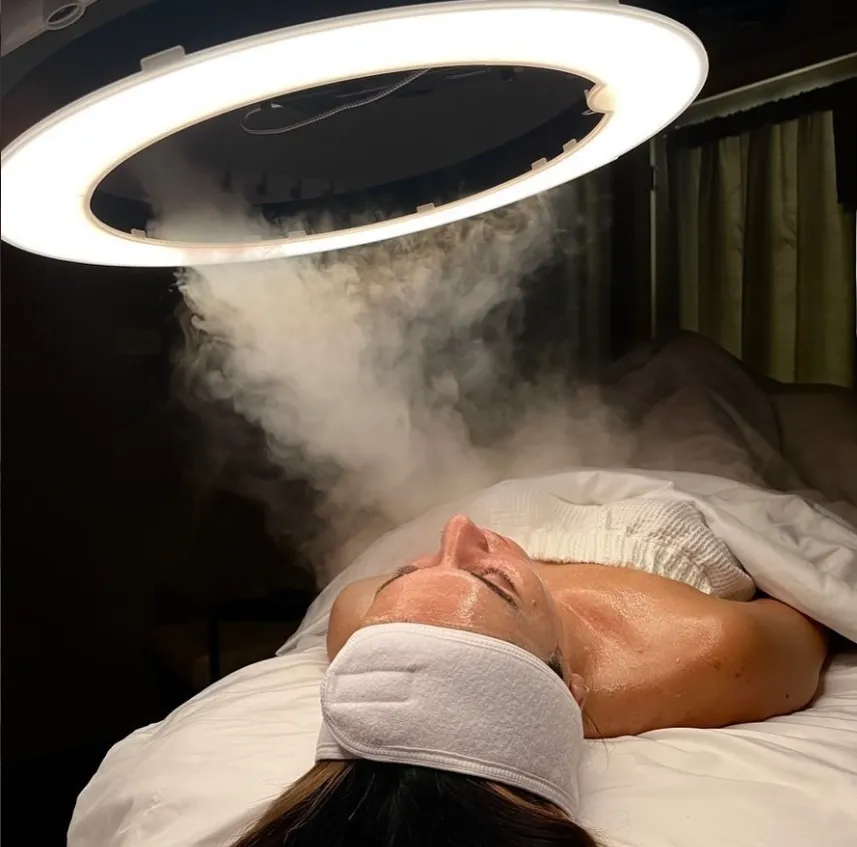
A professional facial can include thorough cleansing and, where appropriate, removal of blackheads. Extraction is a decision to make with your practitioner, not something to assume; see facial extractions: what to discuss before agreeing and facial steaming: when it may be unsuitable.
The page on Facial Skin Care describes what is offered, and a consultation is the place to ask whether it suits your skin. Expect an honest answer about filaments: no treatment removes them permanently.
A few common questions
Frequently asked questions.
Are sebaceous filaments the same as blackheads?
Can I get rid of sebaceous filaments?
Not permanently. They are part of your skin’s structure, and a pore that has been emptied soon fills again.[1]
Should I squeeze the dots on my nose?
No. Squeezing risks scarring and spreading bacteria, and filaments return within days.[1]
Why are blackheads black?
What is the best treatment for blackheads?
The AAD recommends a retinoid to unclog pores, with a benzoyl peroxide wash, and allowing six to eight weeks.[2] If they persist, see a dermatologist.
Can a facial remove blackheads?
A facial may include extraction where it is suitable. Discuss it beforehand, and see a dermatologist for stubborn or inflamed blemishes.
Sources & scope
This Journal article offers general skincare education and a guide to telling two common pore features apart. It does not provide a diagnosis, prescribe treatment or replace individual medical advice. The points above draw on the following published resources.
- Sebaceous Filaments: About, Vs. Blackheads, Why to Leave Alone (Healthline) — what sebaceous filaments are and how they differ from blackheads.
- How to treat different types of acne (American Academy of Dermatology) — what blackheads are and how they are treated.
- What can treat large facial pores? (American Academy of Dermatology) — making pores less noticeable and why to be gentle.
- 10 skin care habits that can worsen acne (American Academy of Dermatology) — products and habits that can worsen breakouts.
Editorial: Merve Akkaya Journal. Learn more about Merve Akkaya.
Continue reading
A little more clarity.
Start with a conversation
Know what you are looking at before you treat it.
If the dots on your nose are the reason you keep buying new products, it helps to have them looked at first.
Tell us what you have noticed and what you have tried. You can explore the consultation options before making an enquiry.
A conversation about suitability comes before choosing a treatment.