
Journal / Trends
Under-eye patches: what they can do for puffiness.
Cool gel patches have become a morning ritual and a pre-event habit. They can make tired eyes feel and look fresher for a while. Here is what they actually do, what no patch can change, and when puffiness is a question for a doctor rather than a product.
The short answer
Under-eye patches can make puffy eyes look and feel fresher for a short time. The cool gel and the hydrating layer help, and some contain caffeine, which narrows blood vessels for a while. They do not change puffiness that comes from ageing tissue, fat pads, bone structure or genetics, and they are not a treatment for dark circles. Habits such as less salt, enough sleep and a slightly raised pillow matter as much. Swelling that lasts beyond a day or two, is painful, red or hot, or affects your vision needs a doctor.
01 / Know what you are treating
Puffy eyes, under-eye bags or dark circles?
Mayo Clinic describes bags under the eyes as mild swelling or puffiness, usually a cosmetic concern rather than a medical one. With age, the tissues and muscles that support the eyelids weaken, skin can sag, fat can move into the lower lids and fluid can collect below the eyes. Fluid retention is most noticeable on waking or after a salty meal. Lack of sleep, allergies, smoking and family traits can all play a part.[1]
Cleveland Clinic draws a useful line. Puffiness happens when fluid builds up in the thin tissue around the eyes; for some people, bags are genetic, the result of prominent fat pads, bone structure or skin laxity.[3] That difference decides what a patch can do. Fluid comes and goes. Structure stays.
Dark circles are another matter again, with their own causes, from pigmentation to visible blood vessels under thin skin, covered in dark circles and skincare. Self-diagnosis around the eyes is not always reliable, so if you are unsure what you are seeing, it is worth having it looked at.

02 / What the trend promises
What an eye patch actually does.
Most under-eye patches are thin sheets of hydrogel or fabric soaked in a water-rich serum. Pressed under the eye, they hold that moisture against the skin and, when cool, give the same kind of effect as a cold compress. Cleveland Clinic explains that cold helps constrict blood vessels and reduce swelling.[3]
Many patches add caffeine. Caffeine is a vasoconstrictor, which means it tightens blood vessels, and a Cleveland Clinic dermatologist describes its effect around the eyes as modest and short-lived: it may improve how the skin looks while you are using it, but it is not a permanent fix, and it will not help bags caused by genetics or structure.[4] Other patches carry peptides, hyaluronic acid or brightening ingredients; what they promise on the pack is the brand’s claim, and independent research on patches as a product is limited. The same questions apply to eye creams, which are covered in eye creams and neck creams.
- A patch can
- Cool the area, add a layer of surface hydration, make fluid puffiness look softer for a while and make the eye area feel more comfortable.
- A patch cannot
- Move fat pads, change bone structure, tighten lax skin or alter what you have inherited. It is also not a treatment for dark circles or an eye condition.
Cleveland Clinic notes that at-home remedies give temporary relief, and that puffy eyes often come back after a while.[3] That is a fair way to think of patches: a pleasant, short-term step, not a correction.
03 / A sensible routine
How to use under-eye patches without irritation.
-
Test before the eye area.
The skin around the eyes is thin and reacts easily. Cleveland Clinic advises trying a caffeine product on another area of the body first and stopping if you notice itching or irritation.[4] The AAD’s general method for testing products is a small spot on the inside of the arm or the bend of the elbow, watching for red, itchy or swollen skin.[6]
-
Clean skin, clear of the lash line.
Place patches on clean, dry skin, well below the lower lashes, so the serum does not run into the eye. If it does and your eye stings, take the patch off and rinse with clean water.
-
Follow the pack, not the trend.
Use them for the time the instructions give, once, and throw them away. Sleeping in patches, or reusing them, is not a better version of the routine.
-
Choose gently if you are sensitive.
If your eyelids tend to react, a simpler, fragrance-free formula is a safer starting point, and one new product at a time tells you what your skin is responding to. How to introduce a new skincare product explains why.
Some newer patches have tiny needles on the underside, often designed to dissolve. These are a different product: they are designed to pierce the skin’s surface, which brings the same questions raised in spicules and “liquid microneedling”, and they deserve more caution than a plain gel patch. Itchy, red, flaky or swollen eyelids after any product may be a reaction; contact dermatitis and skincare explains what to look for.
Not sure what your under-eyes need?
Puffiness, shadows and a routine that irritates the eye area can look alike. A consultation can look at your skin and what you are using before you buy another eye product.
Explore a consultation04 / Beyond the patch
The habits that help as much as any patch.
Mayo Clinic’s lifestyle advice for under-eye bags is simple, and most of it costs nothing:[2]
- A cool compress. Wet a clean washcloth with cool water and hold it under and around the eyes for a few minutes, with light pressure, while sitting up.
- Less salt, fewer late drinks. Cut down on fluids before bed and limit salt in your diet.
- Sleep, slightly raised. For most adults, 7 to 9 hours is a good amount, and sleeping with the head slightly raised, with an extra pillow, can help.
- Allergies and smoking. Avoid allergens where you can; a pharmacist or doctor can advise on allergy medicines. Smoking can make bags worse.
- Make-up, if you wish. Concealer can soften the look when you want it to.
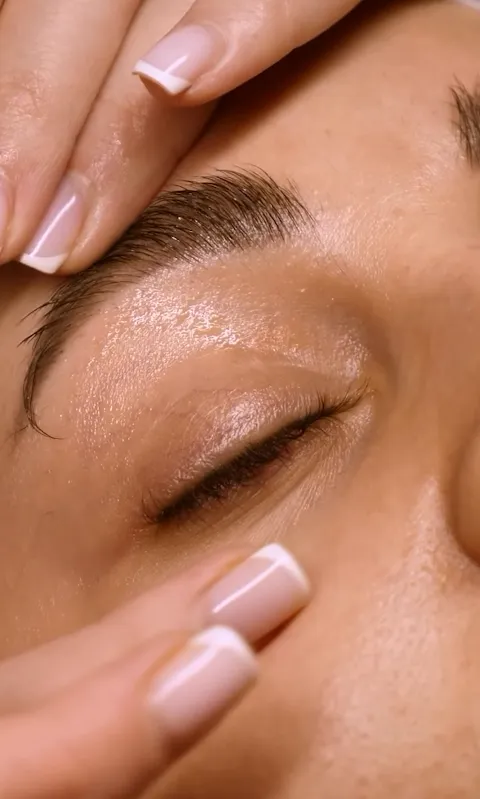
Before an important day, the best plan is the familiar one: patches or a cold compress you have already tried, not a new product the night before. Skincare before an event covers the timing. And in a professional facial skin care session, the eye area is handled gently and kept free of anything likely to irritate; it is care for the skin, not a way to reshape the under-eye area.
05 / A medical question
When puffy eyes need a doctor.
Mayo Clinic advises seeing a health professional if under-eye puffiness causes vision problems, irritation or headaches; a doctor may look for other causes of swelling, such as thyroid disease, infection or allergy.[1] A Cleveland Clinic ophthalmologist adds that swelling lasting longer than 24 to 48 hours should be seen by an eye care professional.[3]
Get urgent medical advice if:
- a swollen eyelid is red, hot, painful, tender or blistered;
- your eyelid droops suddenly, or you cannot open or keep your eye open;
- the pain is in the eye itself, or the white of the eye is very red;
- your eyesight changes, or you are sensitive to light;
- you have a high temperature or feel generally unwell;
- you think it is an allergic reaction.
These are among the signs the NHS lists for an urgent appointment.[5] If your lips, tongue or throat swell, or you struggle to breathe, call your local emergency number (112 in Türkiye) straight away.
For bags that are structural, doctors offer options such as fillers, laser resurfacing, chemical peels or eyelid surgery.[2] Whether any of these is right for you is a medical decision made with a doctor. When to see a dermatologist covers the wider signs.
A few common questions
Frequently asked questions.
Do under-eye patches reduce puffiness?
They can make fluid puffiness look softer for a while. Cooling helps constrict blood vessels and reduce swelling, and caffeine has a modest, temporary effect.[4] They do not change bags caused by fat pads, bone structure, skin laxity or genetics.
How long do the effects of eye patches last?
Not long. At-home remedies give temporary relief, and puffy eyes often come back after a while.[3] Think of patches as a short-term refresh rather than a correction.
Do eye patches help dark circles?
Not in a lasting way. Dark circles have different causes from puffiness, such as pigmentation or visible blood vessels under thin skin, and a cooling patch does not address them. Concealer is the quickest way to soften their look.
Can I use under-eye patches every day?
If your skin tolerates them and the instructions allow it, there is no particular reason not to, but they are not necessary. Stop if the eye area itches, reddens or stings, and test any new patch on another area first.
Are microneedle eye patches the same as gel patches?
No. Microneedle patches have tiny needles, often designed to dissolve, that pierce the skin’s surface. That makes them a different kind of product from a plain hydrogel patch, with more potential for irritation, so they deserve more caution, especially on sensitive skin.
Is professional eye-area care different from using patches at home?
Yes. A professional session starts by looking at your skin and routine, and the eye area is treated gently with the products your skin tolerates. It cannot reshape the under-eye area, but it can help you understand whether you are dealing with puffiness, shadows or irritation, and what is worth doing at home.
Sources & scope
This Journal article offers general skincare education about under-eye patches and puffiness. It does not provide a diagnosis, recommend a specific product or replace individual medical advice. If you are worried about swelling around your eyes, speak to a doctor. The points above draw on the following published resources.
- Bags under eyes: symptoms and causes (Mayo Clinic) — what under-eye bags are, common causes and when to see a doctor.
- Bags under eyes: diagnosis and treatment (Mayo Clinic) — home remedies, lifestyle advice and medical options.
- How to get rid of eye bags (Cleveland Clinic) — puffiness versus bags, cold compresses, temporary relief and when to see an eye care professional.
- Is caffeine good for your skin? (Cleveland Clinic) — how caffeine works on the skin, its limits around the eyes and patch-testing.
- Eyelid problems (NHS) — common eyelid problems and signs that need an urgent appointment.
- How to test skin care products (American Academy of Dermatology) — how to test a new product and the signs of a reaction.
Editorial: Merve Akkaya Journal. Learn more about Merve Akkaya.
Continue reading
A little more clarity.
For tired-looking eyes
Understand the puffiness before the next patch.
If your eyes look puffy most mornings, or your eye products seem to irritate rather than refresh, a consultation can look at your skin, your routine and your habits together, and help you decide what is worth doing at home.
Bring the eye products you use now, or photos of their labels. You can book directly or send a quick question first.
A skincare consultation does not replace a medical assessment.