
Journal / Skincare foundations
How to understand what your skin may actually need.
Before another serum, another step or another treatment, take a closer look at what your skin is telling you, and what your current routine is asking of it.
The short answer
Begin with comfort, consistency and context. Notice patterns, review the products you already use and keep the basics clear. Then choose one priority. If symptoms are persistent, painful or unexplained, seek medical advice before adding more skincare.
01 / Observation before correction
Start with the pattern, not just the mirror.
It is easy to turn a moment in front of the mirror into a shopping list. A little shine becomes an oil-control product. A patch of texture becomes an exfoliant. A tired-looking morning becomes a new brightening serum.
A more useful starting point is to describe what you notice without immediately deciding how to fix it. Does your skin feel comfortable after cleansing? Do your cheeks feel different from your forehead? Does a product sting every time you apply it, or did the change begin after you introduced something new?
Look for a pattern across ordinary days. Note the area, the sensation and the timing. You do not need to leave your skin bare for hours, skip moisturiser or stop sun protection to do this.
Keep a brief skin diary: what you used, what you noticed and anything that changed. A note such as “cheeks feel tight after the new cleanser” is more useful than “my skin looks bad”.
A useful distinction
Your usual skin pattern and today’s concern are two different questions. “I tend to get an oily forehead” describes a pattern. “My cheeks have started stinging” describes a new problem worth understanding. Neither observation is a diagnosis.
02 / Signals, with context
What you notice is a starting point.
Skin descriptions can help you choose products, but they do not explain every change. The American Academy of Dermatology describes oily skin as shiny or greasy, dry skin as rough, itchy or flaky, and combination skin as having both dry and oily areas.[1]
Use those descriptions as orientation. Avoid treating one symptom as proof that your skin needs a particular ingredient.
- Tightness after washing
- Note which cleanser you used, the water temperature and how your skin feels afterwards. Tightness is worth reviewing; it does not identify the cause by itself.
- Shine in some areas
- Notice where it appears. An oily forehead and less comfortable cheeks are useful details to bring to a routine review. Oily skin still needs moisturising.[1]
- Stinging after a product
- Record the product and timing. If a product causes a reaction, wash it off and stop using it. Repeated or severe reactions need appropriate medical advice.[2]
- Breakouts and texture
- Keep track of the location and whether the spots are painful or recurring. Scrubbing and frequent product changes can worsen acne; persistent or deep, painful breakouts warrant a dermatologist’s assessment.[4]
Resist the urge to give every visible detail a treatment plan. Decide which concern affects your comfort or matters most to you, and begin there.
03 / The routine is part of the picture
Review what is there before adding more.
Write down your actual routine: the cleanser, moisturiser, sunscreen, occasional masks, exfoliating products and treatments you use. Include frequency. A product used once a week and the same product used every evening are different routines.
Then ask a few practical questions:
- Purpose: What is each product there to do?
- Overlap: Are several products aimed at the same concern?
- Timing: Did the discomfort begin after a new product or a change in frequency?
- Consistency: Which steps do you actually keep?
- Fit: Does the routine suit your time, preferences and budget?
Adding several active products at once makes it harder to understand which change helped and which did not. More steps also create more opportunities for irritation.[1]
Keep prescribed skincare in a separate part of your list. If you are using medication for a skin condition, discuss problems with the clinician who prescribed it rather than changing the treatment yourself.
Bring the routine you have.
A Skin Edit starts with a focused review of your current routine. A product list or clear photographs of the labels give the conversation something concrete to work from.
See how Skin Edit works04 / One considered next step
Make the next decision smaller.
You do not need to solve every concern at once. A clear next step is easier to follow and easier to review.
-
Keep a dependable foundation.
A simple skincare routine can begin with gentle cleansing, moisturising and sun protection.[1] Choose products you can use comfortably and consistently, rather than a routine built around everything a product promises.
For sunscreen, look for broad-spectrum protection, SPF 30 or higher and water resistance. Use it alongside shade and protective clothing; reapply according to the label, including after swimming or sweating.[3]
-
Choose a priority you can describe.
“I want my cheeks to feel more comfortable after cleansing” is a clearer starting point than “I want perfect skin”. It gives you something meaningful to discuss and review.
-
Introduce change deliberately.
If you add a new skincare product, follow its directions and test it on a small area first. The AAD describes repeated small-area testing over seven to ten days. This can help identify a reaction, but it is not a guarantee of tolerance or a substitute for medical patch testing.[2]
-
Review instead of continually replacing.
Keep a record of what changed and what happened afterwards. Set a review point that suits the product or plan. There is no single deadline that applies to every concern, and worsening symptoms should not wait for a routine review.
05 / Support with a purpose
Where professional care belongs in the plan.
A skincare consultation gives you space to discuss your observations, your routine and the outcome you are hoping for. The aim is to make the next step clearer.
For a routine question, Skin Edit may be a useful place to begin. If your interest is professional facial care, explore Facial Skin Care and discuss suitability before choosing a session. A treatment name alone does not tell you whether it fits your skin or your goals.
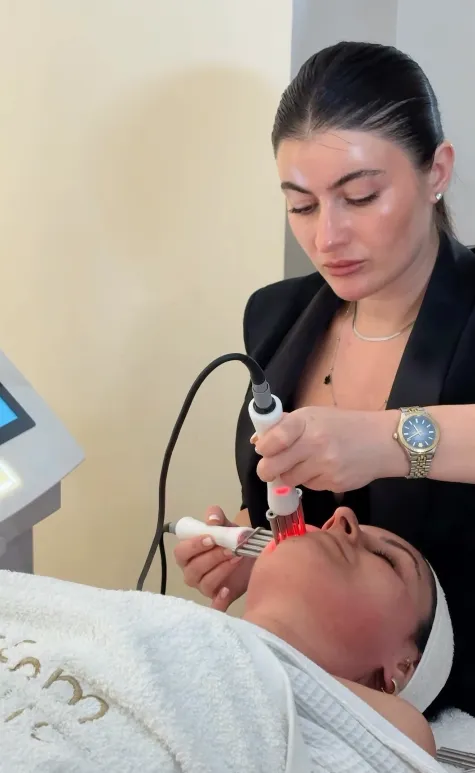
The same principle runs through Merve Akkaya’s approach to skincare: begin with context, keep expectations clear and choose care with a purpose. What you use at home and what happens in a treatment room should be discussed together.
When the next step is a dermatologist.
A skincare consultation does not diagnose or treat medical skin conditions. Persistent or recurring reactions, an unexplained rash, or deep and painful acne need a medical assessment. A severe reaction needs prompt medical care.[2][4]
Describe the symptoms, when they started and what you have used. That information is useful whether the conversation begins with a skincare practitioner or a doctor.
06 / A practical place to begin
Your next skin check-in.
Before buying something new, take a few minutes to collect what you already know. Keep it brief enough to be useful.
Five things to bring to the conversation
- Your main concern, described in one sentence.
- Where you notice it and how it feels.
- When it started and any recent changes.
- Your current products, frequency and prescribed treatments.
- What you would like to improve, within your time and budget.
You may decide that a simpler routine is the right starting point. You may want help reviewing it. You may need a dermatologist. Understanding that difference is a useful outcome in itself.
A few common questions
Frequently asked questions.
How can I work out what my skin needs?
Begin with what you can describe: how your skin feels, where a concern appears, when it started and what you already use. Look for patterns rather than deciding from one photograph or one difficult day. A routine review can help organise those observations; symptoms that persist or remain unexplained need medical advice.
Can my skin be oily and still need moisturiser?
Yes. Oily skin still benefits from moisturising. The AAD includes moisturiser in basic care for oily skin.[1] Consider the product’s texture and how comfortably it fits your routine rather than assuming shine means you should leave moisturiser out.
Does stinging mean a skincare product is working?
Stinging does not prove that a product is helping. Some ingredients can irritate skin. If you develop a reaction, wash the product off and stop using it; seek medical advice if the reaction is severe, persistent or keeps returning.[2]
Should I change my whole routine at once?
For an ordinary routine review, changing several products together makes it harder to understand what helped or caused discomfort. Start with a clear priority and introduce changes deliberately. If you are reacting to a product or using prescribed treatment, the appropriate next step may be medical advice rather than a gradual routine experiment.
How long should I wait before reviewing a change?
There is no single timescale for every product or concern. Follow the product directions or the plan agreed with your practitioner or clinician. For context, the AAD advises that acne treatments commonly need six to eight weeks to show some improvement.[4] That is not a reason to continue a product that is causing a reaction.
Do I need a facial to understand my skin better?
No. You can begin with your observations and a review of your home routine. A consultation can help you discuss whether professional facial care has a useful role. A treatment should follow a suitability discussion, rather than be the automatic next step.
Should I choose Skin Edit or a consultation?
If your main question is about the products and steps in your current routine, explore Skin Edit. If you want to discuss professional skincare or are unsure where to start, the consultation page explains the available routes. Medical symptoms should be assessed by an appropriate clinician.
Sources & scope
This Journal article offers general skincare education and a framework for a routine conversation. It does not provide a diagnosis, prescribe treatment or replace individual medical advice. General care guidance is supported by the following American Academy of Dermatology resources.
- Skin care on a budget — basic care and skin-type descriptions.
- How to test skin care products — introducing products and responding to reactions.
- How do I know if I’m using the right sunscreen? — broad-spectrum protection, SPF and water resistance.
- 10 skin care habits that can worsen acne — irritation, treatment timescales and seeking dermatology care.
Editorial: Merve Akkaya Journal. Learn more about Merve Akkaya.
Continue reading
A little more clarity.
Start with a conversation
A clearer next step for your skin.
If your routine feels difficult to untangle, bring what you use and what you have noticed. Begin with a conversation about the kind of support you are looking for.
Tell us your main skincare question and whether you are interested in a routine review or professional care. You can explore the consultation options before making an enquiry.
A conversation about suitability comes before choosing a treatment.