
Journal / Tone & texture
Dull skin: what to review before buying another product.
“Dull” is one of the vaguest words in skincare, and one of the most profitable. Before a brightening serum, look at what the word is describing on your own face.
The short answer
Dullness is a description, not a diagnosis. It often reflects skin that is short of moisture, a build-up of dry surface cells, irritation from doing too much, or the effects of sun over time. Review moisturising, cleansing, exfoliation and sun protection before adding a product. Patches of changed colour should be assessed.
01 / What the word hides
“Dull” can mean several things.
People use “dull” for skin that looks flat, tired, greyish or uneven. Those are different observations, and they have different causes.
- Lack of glow
- The surface looks matte and flat. Often linked to moisture.
- Rough texture
- Light does not reflect evenly from a rough surface. Often linked to dryness or a build-up of dry cells.
- Uneven colour
- Darker patches, marks left by breakouts or general unevenness. A separate matter from dullness, though the two are often named together.
- A tired look
- Shadows and fine lines that look more noticeable than usual.
Decide which of these you mean. “My cheeks look rough and flat in the afternoon” is something you can act on. “My skin is dull” is not. The same habit of description runs through how to understand what your skin may need.
02 / Four checks
What to review first.
Each of these can change how skin looks, and each costs nothing to check.
-
Moisture.
The American Academy of Dermatology notes that moisturiser traps water in the skin, helping it look brighter, and that the extra moisture can reduce the appearance of fine lines.[1][2] If you skip moisturiser, use very little or apply it to fully dry skin, begin here. Healthline lists dullness among the signs of dehydrated skin.[3] See dry or dehydrated skin.
-
Cleansing.
Check in both directions. Is everything coming off at night, and does your face feel tight after washing? Either can affect how skin looks. See why skin feels tight after cleansing.
-
Exfoliation.
Again, two directions. Some people find that exfoliating improves the look of their skin.[4] Others are doing too much, and the redness and dryness that follow do not look bright. See how much exfoliation is too much.
-
Sun protection.
Regular sunscreen use can reduce the risk of premature skin ageing, including age spots, and of dark spots that appear when skin conditions clear.[5] The effect of sun on tone builds over years, and so does the benefit of protection. See choosing a sunscreen you will actually use.
Sleep, hydration and general health also show in the skin. Healthline’s guidance for dehydrated skin includes getting plenty of sleep and replacing fluids.[3] These are not skincare steps, but they are part of the picture.
03 / An overlooked cause
When doing more makes it worse.
A common route to dull-looking skin is an ambitious routine. Several brightening products are layered, the skin becomes irritated, and the irritation is read as a reason to add something else.
The AAD’s advice on anti-ageing products applies: using several at once can irritate the skin,[2] and it suggests focusing on one concern at a time.[6] If your skin stings, feels tight or has become red since you started trying to brighten it, the kindest step is to take products away. See active ingredients: when more is not better.
04 / Not the same thing
Dullness, uneven tone and marks.
If what you are seeing is colour, not flatness, the question changes. Uneven tone has several possible causes and some of them need assessing.
- Marks after breakouts
- Flat marks left behind when a blemish heals are different from scars. See dark marks vs acne scars and red marks after breakouts.
- General unevenness
- See uneven skin tone: what to clarify before choosing care.
- Defined patches
- Defined patches of darker colour may be melasma or another condition. See melasma vs other dark spots: why assessment matters.
- Rough areas
- Texture that does not respond to moisturising. See rough facial texture: when exfoliation is not the whole answer.
Sunscreen is relevant to all of these. The AAD notes that tinted sunscreen also helps protect against visible light, which can worsen dark spots.[5]
05 / If you still want a product
Before you buy something for brightness.
If the basics are in order and you would still like to try a product, a few rules keep the experiment useful.
- Choose one product for one aim. The AAD notes that no product treats every concern.[6]
- Expect modest results. Claims of rapid transformation are, in the AAD’s words, too good to be true.[6]
- Allow time. Most products take at least six weeks to work, and some up to three months.[2]
- Add it on its own. See how to introduce a new skincare product.
- If you are considering vitamin C, read vitamin C serums: what to consider before choosing one.
Review before you add.
A Skin Edit looks at the routine you have and whether the cause of dullness is already in it.
See how Skin Edit works06 / Other routes
Where professional care and medical advice fit.
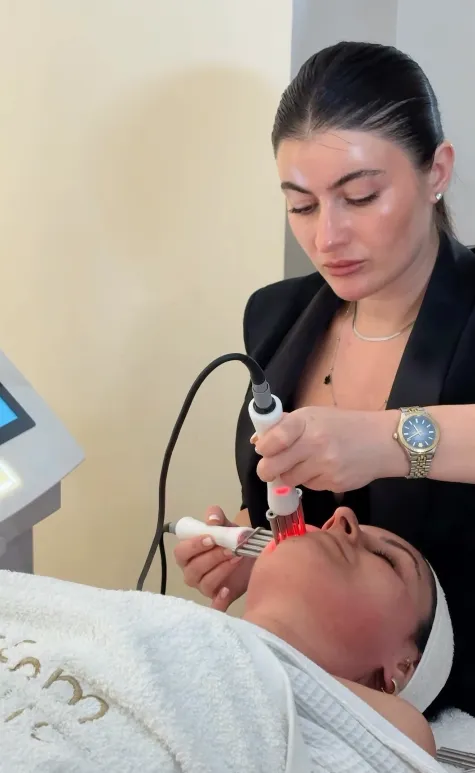
A professional facial can include thorough cleansing, exfoliation suited to your skin and a mask. For some people that is a useful reset; for others the home routine was the issue. Facial Skin Care describes what is offered, and when professional skincare belongs in the plan helps you decide. A consultation comes first.
When to see a dermatologist
New or changing patches of colour, marks that are spreading, or a change in your skin that you cannot explain should be assessed by a dermatologist.
If your skin has become dull along with persistent dryness, itching or irritation that does not improve with gentle care, seek medical advice.
A few common questions
Frequently asked questions.
What causes dull skin?
There is no single cause. Common contributors are skin that is short of moisture, a build-up of dry surface cells, irritation from too many products and the long-term effects of sun exposure.
How can I make my skin look brighter?
Start with the basics: moisturise consistently, cleanse gently, protect your skin from the sun and review how much you exfoliate. The AAD notes that moisturiser helps skin look brighter.[1]
Does exfoliating help dull skin?
It can for some people, and it can make things worse for others. The AAD advises that exfoliation is not for everyone and that doing it improperly can do more harm than good.[4]
Is dull skin the same as dehydrated skin?
Not exactly. Dullness is one of the signs described for dehydrated skin,[3] but skin can look dull for other reasons too.
Do I need a vitamin C serum?
No one needs one. If the basics are in place and you would like to try a brightening product, choose one, introduce it alone and give it several weeks.
When is uneven skin tone a medical question?
When you notice defined patches, marks that change or spread, or any change you cannot explain. A dermatologist can assess the cause.
Sources & scope
This Journal article offers general skincare education and a checklist for skin that looks dull. It does not provide a diagnosis, prescribe treatment or replace individual medical advice. The points above draw on the following published resources.
- Skin care on a budget (American Academy of Dermatology) — how moisturiser affects the look of skin.
- How to maximize results from anti-aging skin care products (American Academy of Dermatology) — moisturiser, sun protection and how long products take to work.
- Dehydrated Skin: Symptoms, vs. Dry Skin, Test, Treatments, and More (Healthline) — dullness as a sign of dehydrated skin.
- How to safely exfoliate at home (American Academy of Dermatology) — exfoliating safely and its risks.
- How do I know if I’m using the right sunscreen? (American Academy of Dermatology) — what regular sunscreen use helps prevent.
- How to select anti-aging skin care products (American Academy of Dermatology) — focusing on one concern and realistic expectations.
Editorial: Merve Akkaya Journal. Learn more about Merve Akkaya.
Continue reading
A little more clarity.
Start with a conversation
Brightness begins with the basics done well.
If your skin looks flat and you are not sure why, describe what you see and what you use. The cause is often already in the routine.
Tell us what “dull” means on your skin and what you have tried. You can explore the consultation options before making an enquiry.
A conversation about suitability comes before choosing a treatment.